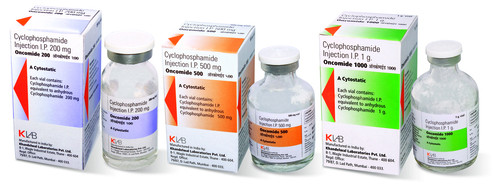
Cyclophosphamide
Warning, Do not use if Pregnant!
What is Cyclophosphamide Cyclophosphamide is used alone or in combination with other medications to treat Hodgkin's lymphoma (Hodgkin's disease) and non-Hodgkin's lymphoma (types of cancer that begin in a type of white blood cells that normally fights infection); cutaneous T-cell lymphoma (CTCL, a group of cancers of the immune system that first appear as skin rashes); multiple myeloma (a type of cancer of the bone marrow); and certain types of leukemia (cancer of the white blood cells), including chronic lymphocytic leukemia (CLL),
chronic myelogenous leukemia (CML), acute myeloid leukemia (AML, ANLL), and acute lymphoblastic leukemia (ALL). It is also used to treat retinoblastoma (cancer in the eye), neuroblastoma (a cancer that begins in nerve cells and occurs mainly in children), ovarian cancer (cancer that begins in the female reproductive organs where eggs are formed), and breast cancer. Cyclophosphamide is also used to treat nephrotic syndrome (a disease that is caused by damage to the kidneys) in children whose disease has not improved, has gotten worse, or has come back after taking other medications or in children who experienced intolerable side effects with other medications. Cyclophosphamide is in a class of medications called alkylating agents. When cyclophosphamide is used to treat cancer, it works by slowing or stopping the growth of cancer cells in your body. When cyclophosphamide is used to treat nephrotic syndrome, it works by suppressing your body's immune system.
How should this medicine be used?Cyclophosphamide injection comes as a powder to be added to fluid and injected intravenously (into a vein) by a doctor or nurse in a medical office or hospital outpatient clinic. It may also be injected intramuscularly (into a muscle), intraperitoneally (into the abdominal cavity), or intrapleurally (into the chest cavity). The length of treatment depends on the types of drugs you are taking, how well your body responds to them, and the type of cancer or condition you have. Your doctor may need to delay your treatment or adjust your dose if you experience certain side effects. It is important for you to tell your doctor how you are feeling during your treatment with cyclophosphamide injection.
Other uses for this medicine.Cyclophosphamide injection is also sometimes used to treat a certain type of lung cancer (small cell lung cancer; SCLC). It is also used to treat rhabdomyosarcoma (a type of cancer of the muscles) and Ewing's sarcoma (a type of bone cancer) in children and Myasthenia Gravis. Talk to your doctor about the risks of using this medication for your condition. This medication may be prescribed for other uses; ask your doctor or pharmacist for more information.
What special precautions should I follow?Before receiving cyclophosphamide injection,
- tell your doctor and pharmacist if you are allergic to cyclophosphamide, other alkylating agents such as bendamustine (Treanda®), busulfan (Myerlan®), Busulfex®), carumustine (BiCNU®, Gliadel® Wafer), chlorambucil (Leukeran®), ifosfamide (Ifex®), lomustine (CeeNU®), melphalan (Alkeran®), procarbazine (Mutalane®), or temozolomide (Temodar®), any other medications, or any of the ingredients in cyclophosphamide injection. Ask your pharmacist for a list of the ingredients.
- tell your doctor and pharmacist what other prescription and nonprescription medications, vitamins, nutritional supplements, and herbal products you are taking or plan to take. Be sure to mention any of the following: allopurinol (Zyloprim®), cortisone acetate, doxorubicin (Adriamycin®, Doxil®), hydrocortisone (Cortef®), or phenobarbital (Luminal® Sodium). Your doctor may need to change the doses of your medications or monitor you carefully for side effects. Many other medications may also interact with cyclophosphamide, so be sure to tell your doctor about all the medications you are taking, even those that do not appear on this list.
- tell your doctor if you have previously received treatment with other chemotherapy medications or if you have had x-rays recently. Also tell your doctor if you have or have ever had kidney or liver disease.
- you should know that cyclophosphamide may interfere with the normal menstrual cycle (period) in women and may stop sperm production in men. Cyclophosphamide may cause permanent infertility (difficulty becoming pregnant); however, you should not assume that you cannot get pregnant or that you cannot get someone else pregnant. Women who are pregnant or breast-feeding should tell their doctors before they begin receiving this drug. You should not plan to have children while receiving chemotherapy or for a while after treatments. (Talk to your doctor for further details.) Use a reliable method of birth control to prevent pregnancy. Cyclophosphamide may harm the fetus.
- if you are having surgery, including dental surgery, tell the doctor or dentist that you are receiving cyclophosphamide injection.
- nausea, Vomiting
- Loss of appetite or weight
- abdominal pain
- diarrhea
- hair loss
- sores on the mouth or tongue
- changes in skin color
- changes in color or growth of finger or toe nails
- sore throat, fever, chills, or other signs of infection
- poor or slow wound healing
- unusual bruising or bleeding
- black, tarry stools
- painful urination or red urine
- rash
- hives
- itching
- difficulty breathing or swallowing
- shortness of breath
- cough
- swelling in the legs, ankles, or feet
- chest pain
- yellowing of the skin or eyes
Cyclophosphamide may increase the risk that you will develop other cancers. Talk to your doctor about the risks of receiving cyclophosphamide injection. Cyclophosphamide may cause other side effects. Call your doctor if you have any unusual problems while receiving this medication.
Take Note
Unless otherwise stated, the information provided here is of a general nature, composed by non-medical personnel. It is meant to be accurate and helpful advice for MG patients. It is not intended to be medical opinion, nor is it a substitute for personal professional medical care.